Saturday, March 30, 2013

The Quiet Ones are Always the Fiercest

I'm going to keep going with the theme of family strength (Strength through the Generations).  I've focused on my "blood" family and their individual shows of strength.  But we can't forget those who have married into our brood. We are attracted to the strong.  And it shows itself in the most incredible and heartbreaking ways.

My Kerkhoffs can be a bit overwhelming.  I admit it.  There's no reason to hide from it.  We can't escape it.  But I think we tend to forget that not everyone is like us--loud and opinionated.  I think our "ways" are fabulous, but it did take me some years to realize that not all people share my views on this particular subject. 

I loved Joni right away, but she was quiet.  And we weren't used to that.  We were used to Joe and Henry, and I think we scared her a bit (ok, A LOT!).  Thinking back, I can't imagine walking into our family.  I often wonder how Eric "prepped" her for meeting us.


I always appreciated how much Joni welcomed me.  I visited them in Houston for a week, and one of the things that struck me was how much she actually seemed glad to have me invade her home for that long!  And what great memories I have of that trip--watching "Pee Wee's Big Adventure" and drinking cheap Mexican beer with Eric.  My brother literally having to escort Joni and me out to the car after one too many excellent margaritas at a fantastic local Mexican restaurant, Spanish Village.  Cold Stone Creamery (before they were everywhere).  Fabulous dinners out every night.  This was before I started my glamorous job in the airline business, so I loved the excitement of traveling to their home.


Sarah.  I'll never forget when Mom told me.  For some reason, I had stopped over at Mom and Dad's, and Mom was crying.  She said that Eric had called and told them that Sarah had died.  Joni was just about at her due date and went in for her last scheduled checkup.  Just as at every prenatal visit, the doctor used that little gadget to listen for Sarah's heartbeat.  I can't imagine the silence in that room.  The suffering of Joni as she waited for the sound of Sarah.  Then the doctor performed an ultrasound and confirmed the unthinkable.

She had a knot in her cord, and when she "dropped" in preparation to be born, the knot was pulled too tight.  How on earth could a knot form?  When Sarah was just a wee little one, she "swam the wrong way" and tied a knot in her own cord.  Up until the end of the pregnancy, the knot was loose enough to not impact Sarah's growth and nutrition.  It wasn't until the end that it was too tight to be able to sustain her.

True Knot Complications

I remember being very shocked when Mom told me that they were inducing Joni's labor.  WHAT???!!!  I couldn't understand why they didn't just give her a C-section.  Why make Joni go through all of that?  Why "punish" her that way?  When Joni and I talked about Sarah after that, she told me that she was so glad that she was able to give birth to Sarah without having to have a C-section.  I must've given her a strange look because I'll never forget her looking at me and saying, "It was the last 'motherly' thing I was able to do for Sarah.'"  Oh my God!  Twenty one years later, I am still brought to tears by her "simple" statement.

However, after Mom told me the news about Sarah, I simply couldn't process the news.  I had just had Nick 6 weeks before.  We were all numb.  At some point that day (after Eric told us but before Sarah was born), I walked past Mom and Dad's bedroom door, and I heard Dad praying.  "Please God, I've had a long life.  Take me.  Please don't take Sarah.  Take me."   He kept repeating this prayer, over and over, as he was sobbing.

In the years that have passed since Sarah, I have always marveled at Eric and Joni.  Sarah was and will always be an important part of our family.  But I think I was most amazed at the fact that Eric and Joni were never bitter.  Grieving parents?  Yes.  Bitter?  No.  Strong?  Yes.  And amazing.

And then they had Hope.  What a fantastic story her life is!  But that's for another blog entry.


I don't even know how to write about Joni's battle with Stage 4 ovarian cancer.  Because words can't do it justice.  Anything I write will seem trite, and I will never be able to convey Joni's fierceness.

Eric, Joni, and Hope came to "my" Joe's First Communion Party in May, 2004.  It was only a few days after the party that Eric told Mom and Dad that doctors had found cancer cells in the fluid they had drained from around Joni's lungs (I think I have these details correct, but I may be mistaken about the diagnosis and timing).  When I asked Mom why Eric or Joni hadn't said anything when they were at the party, Mom said that Eric told her that Joni didn't want to ruin Joe's day.  That's Joni, thinking of others even in the midst of the storm.

I will simply tell you that I never remember Joni complaining about anything concerning her treatment and/or diagnosis.  As a matter of fact, Eric called me one time to ask me if I could get Joni to the ER because she was getting dehydrated after her chemo (this is when they lived in Mason), and he would meet us at the ER (he was at work, and I could get her to Bethesda North quicker).  I rushed over to their house and got her in the car.  And during our drive to the ER, she kept apologizing that I "had" to come and get her and how sorry she was that she was "inconveniencing" me.  I finally told her to stop it!

She kept fighting and was declared in remission, against incredible odds.  Her "numbers" went up a little bit after a few years, she had chemo, and they came back down.  But that remission didn't last long.  Then she began her last fight.

For me, her last battle was a bit of a blur.  We all deal with things in our lives and get caught up in our own stuff.  And at this time, Eric and Joni were living up in a Chicago suburb.  Eric always kept us updated with how Joni was doing with chemo and things.  And then he e-mailed us on New Year's Day, 2012.  He had rushed her to the ER and after being in the hospital for a few days, they found and removed tumors that were totally blocking her intestines.  They also found that the cancer had "seeded" itself in numerous places on her abdominal wall.

I was driving up to Chicago while she was in surgery.  About half way into my drive, my sister Betsy called me to tell me the news of what they discovered.  By the time I got to the hospital, she had just been taken from Recovery and settled into her regular hospital room.  Eric told me that she hadn't been told yet, so I quickly said hello to her, gave her a kiss and left the room so the doctor and Eric could tell her.

Eric got in touch with me a while later and met me in the hospital cafeteria.  He said that she wasn't surprised by what they had found.  She had suspected.  No screaming.  No tantrums.  Just calm.  And strong.  Again.

One of the clearest memories of that day was when a nurse came in and asked her about her nausea level.  Joni was very nauseous due to the chemo and pain meds, and the nurse explained to both Joni and Eric that she couldn't receive the anti-nausea medication again for a certain number of hours.  But she could find out if the doctor could prescribe something else that could be given to her more quickly.  She asked Joni about what her nausea level was (I think she gave Joni a scale of 1-10).  For me, it would've been a TEN (I'm the type who wants laughing gas to get my teeth cleaned, so that tells you a little bit about my tolerance level), but Joni told the nurse that it was maybe a 3 or 4 (I think those were the numbers she said).  The nurse told Joni and Eric that she'd ask the doctor about changing the medication.  And Joni said, "Whenever you have time."

For me, her response to the nurse was and is very telling about Joni.  She was not self centered.  She always thought of others, even as she was going through something like this.  She knew that she wasn't the nurse's only patient and knew that the nurse was busy.  How many of us could say that we'd respond the way that Joni did?  I can't.  I'd be screaming to get me the freaking medication!  Again, it's that "quiet" strength of hers.  Just another example in a long litany of them.

It was amazing to talk to her during those days.  She told me that she kept a journal with her always.  Very close so that she could write in it whenever she felt the desire.  She kept a bag next to her with things she needed.  After a dream, she asked me to order some red maracas for her so she could SHAKE them at cancer when she got mad.  She also told me that when she was given units of blood, she always prayed for the people who had donated it.  Please think about that for a moment.  Because that "simple" act says so much about who she was and is.  She didn't pray for herself while getting the blood.  No.  She prayed for those who had taken the time to donate it.

And her fight continued on for a little over 12 months.  More surgeries, "permanent" g-tube to drain her stomach, numerous CT scans, infections, fevers, antibiotics, chemo, blood clots, low blood pressure......

According to her doctors, Joni was "off the charts" in terms of the length of her survival.  She had cleared so many hurdles that she had approached while running her race.

However, eventually the chemo stopped providing any clinical benefit to her.  Joni was told that she was approaching "end of life."  I still can't wrap my brain around it.  Although it didn't seem to make sense (to my non medical brain), the fluids and liquid nutrition she was receiving started causing more harm than good.  The fluids and liquid nutrition had to be stopped.  Joni then made the decision to receive hospice care.

Our family rushed up to Chicago.  I was in LA and immediately flew there to be with them.   During the days that my sisters, parents, and I were up there (our brother Jim had visited the weekend before), we talked to each other a lot about how Joni walked through this trial of hers.  I remember one conversation with my sister Kathy about how different Joni was compared to how we suspected we'd be.  As Kathy told me, "It would all be about ME!"  And we laughed (there were many times that if we didn't laugh, we'd cry--and we cried a lot) because Joni wasn't like that.  Not when she was first diagnosed, not as she was going through years of chemo, and not during this time.

Joni experienced incredible dreams during her last days.  My eldest sister Karen, who shares a horrific bond with Eric (And the Strength Continues....), asked if she had seen anyone who had passed away.  And this is the answer Karen received:  We Lost--But We Won.

The hospice nurse had told us that, when we walked into Joni's room, we should always tell her who we were so she'd know who was in the room with her.  We'd also tell her if we had to leave the room.  But the nurse also told us to tell her that it was ok "to go."  There was always someone with her, and when we were in the room we'd talk to her, pray for/with her, and/or just be silent with her.

I remember asking her who else was in the room with us (when I was alone with her).  One of my favorite Scriptural passages is Heb 12.1, We Are Surrounded By a Great Cloud of Witnesses.  And I would ask Joni, "Who is here with us?  Who's in the Cloud that is surrounding you?"  This actually became a main topic of discussion for us.  She couldn't answer me with words, but a little while later, I was given the answer.

A few of our sisters and our parents had to get back, so they drove home on Saturday morning.  I was able to stay up there, so that Saturday, it was Eric, Hope, Karen and me.  Eric asked Karen and me if we could take 3 hour "shifts" through Saturday night.  Eric would take the 11pm-2am shift, I'd take the 2am-5am shift, and Karen would take the last one.

On January 27, 2013, at 2 am, I went upstairs to be with Joni.  Eric told me that her breathing hadn't changed.  He also told her that he was going to go downstairs and try to get some sleep, and I told her that she was stuck with me for a few hours.  I talked to her for a few minutes, and then Hope came in to say goodnight to her mommy.  After her "goodnight," Joni and I were alone and we "talked" again for a minute or two.  I had brought my laptop upstairs with me so that I could concentrate on something through the night, and I started surfing the web.  I was sitting on their bed, which was next to the hospital bed Joni was in.

At about 2:20-2:25 am, I noticed that the wifi signal was very weak (not at all usual for Eric's excellent wifi service).  And then the wifi connection dropped completely.  I moved my cursor over the wifi signal on the top of my screen, and I don't remember seeing their network listed as one that my computer could pick up.  But I waited for the connection to reestablish itself (as it always had in the past), but it didn't.  The wifi connection was completely gone.

During all of this, Joni's breathing was exactly the same as it had been.  After realizing that the wifi was gone, I closed my laptop and put it to the side of me.  A second later, a minute later, 2 minutes later......I'm not sure how long the pause lasted.  But then Joni's breathing changed.  I remember sitting up straight and waiting.  She breathed again, and then......nothing.  I quickly jumped up and told her that I knew that we had all been telling her that it was ok to go, but would she please hold on for just a minute until I could get everyone in the room.  Eric didn't hear me call for him the first time (I didn't yell down the stairs), so I quickly ran into the guest bedroom where Karen was sleeping to tell her to get up.  Hope was across the hall in her room and heard me.  She and I both ran into her parents' room, and when Hope got into the room, Joni took another breath.  I ran down the stairs to get Eric.  When the four of us were all with her, she took one more breath.  And then...........

I can never articulate how privileged I felt and feel to be allowed to be in that room with them.  I was given an incredible blessing.

At some point, I walked downstairs to make the phone calls to our sisters and brother.  After that was taken care of, I sat down on their family room couch and opened up my laptop.  And when the wifi connection was quickly established, I remembered what had happened in her room right before she began her "transition."  I use that word because I can't think of another one in the English language that adequately describes what was happening to Joni during those moments.

Was the spiritual energy so incredible in the room at that moment that wifi simply could not NOT be interrupted?  Was it at that moment that Joni's entire "cloud of witnesses" came to be with her and escort her Home?

When I told Eric about it, he knew what had happened.  It was when Sarah came to take her Mommy Home.  The wifi password for their home has Sarah's name in it because in my brother's words, "She is everywhere but can't be seen; like wifi."

Hope gave me a bit of another "angle" for it, too.  I told her that perhaps the wifi dropped, in part, because I needed to be fully present for what was about to happen (not that I wouldn't have noticed the change in Joni's breathing, but that I needed to not be distracted in any way when it started).  Hope smiled and told me that her mom would always tell her, "Put the computer down and be PRESENT."  I've also heard that Joni would give "grief" to Hope if she were texting while they were eating.

A couple of days after Joni passed from this earthly life to her Heavenly home, my brother created this for her:


Joni's funeral was held at The Holy Spirit Center in Norwood, Ohio, a place she loved and felt an immediate connection to.

Holy Spirit Center

My brother told me that when he went to speak to the managing director to thank them for allowing Joni's funeral to be held there, he was told that the employees were curious about Joni.  This was the first funeral ever allowed to be held there, and they had to receive special permission from the Archbishop of Cincinnati.  Because the Archbishop gave permission, the priest who said the mass is the President and Rector of Mount St. Mary's Seminary (the Archbishop didn't assign the mass to him--he was given the mass "out of luck"), and the organist and singer who agreed to do the music for Joni's mass used to be at St. Peter in Chains (obviously, all of those involved are rather "big" in the Archdiocese) the employees asked, "Who is this Joni Kerkhoff?  She must be someone important."

Yes, she was and is someone important.

She was a warrior.

An IMPORTANT WARRIOR.


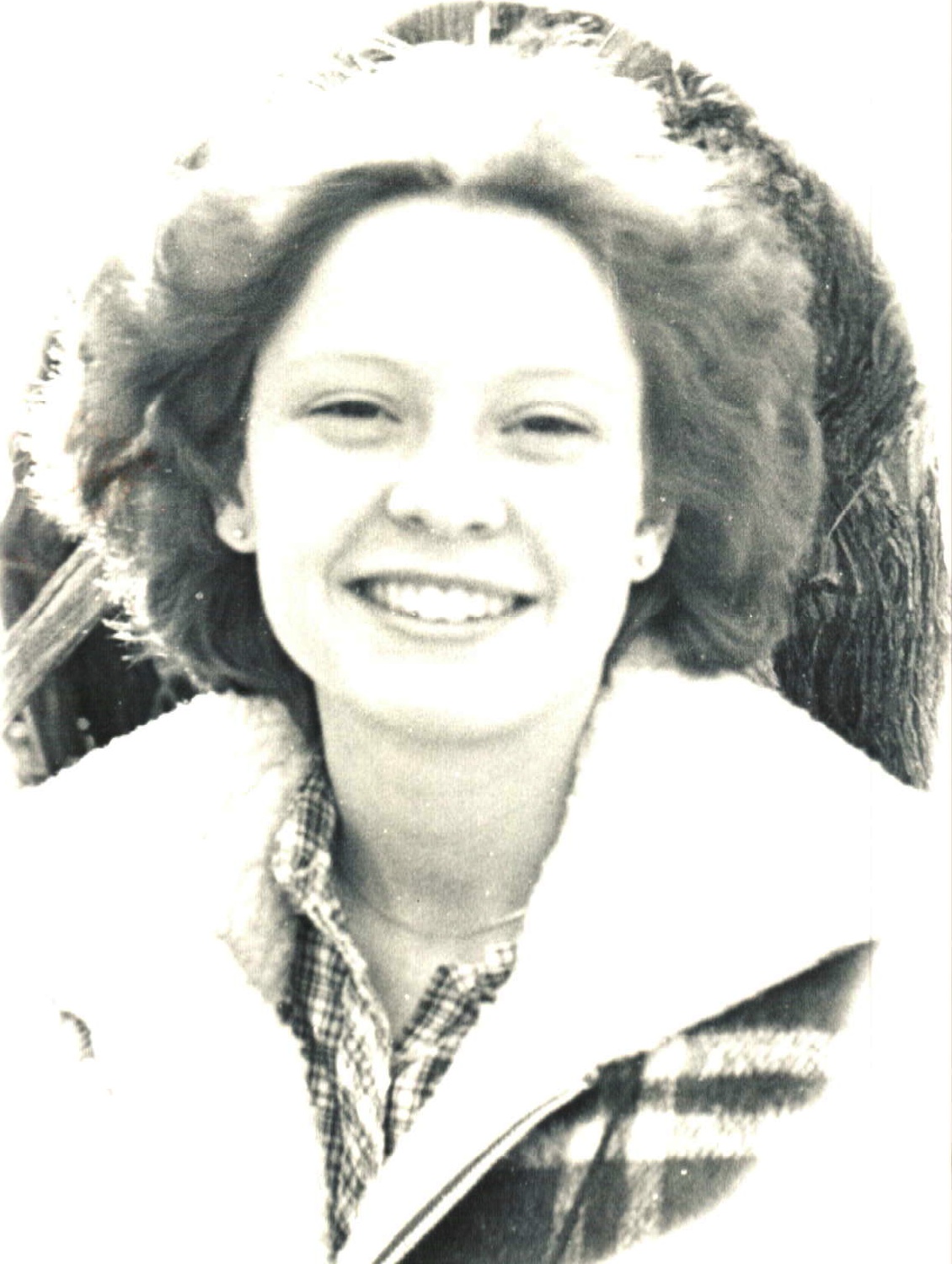
Joni Sue Veale Kerkhoff
15 March 1959 - 27 January 2013


Wednesday, March 13, 2013

Rt. Rev. Gerhard Heinrich Geisen, P.A.

But in our family, he was simply "Fr. Gerry."

I never knew him.  He died the year before I was born, and he is one of many whom I wish I had known. My mother loved him very much, and from all accounts, he and my Grandma Elsie were very close.  Mom told me that she suspected that Fr. Gerry was not only Grandma's confessor but also her confidant.  Grandma was his elder by a few years, and it appears that they were close their entire lives.


Fr. Gerry Geisen as a baby


Grandma Elsie, 2 years old


I don't know much about his early life.  But I've heard wonderful stories about him from Mom.  Grandma told her about the times that the poor or a drunk would knock on Fr. Gerry's door, he would get up and answer it, talk with the person(s),  and he would give them his dinner and would then go without.

Another lovely story that she has told me is that he would come and visit Grandma and her after Grandpa "Bud" died.  Grandma was a proud woman and a very hard worker.  I never heard a complaint cross her lips, so Mom doesn't know if she ever told her siblings about the financial hardships she faced after Grandpa died (and also during his illness).  But Mom remembers a few instances where she and Grandma would find quarters and half dollars hidden throughout their house after a visit from Fr. Gerry.  They found the coins in the medicine cabinet, throughout the living room and bedrooms.  He must've known that his older sister needed help but didn't want to burden anyone with the request.  So he took it upon himself, just as he did with those unexpected visitors to his door, to help.

Fr. Gerry wasn't just your "run of the mill" priest.  No.  Somehow, someone must have seen something special in him.  He studied theology at the College of the Propaganda (Pontifical Urbania University) in Rome and was ordained by Cardinal Pompili at San Giovanni in Laterno in Rome on 14 June 1924.  And his first mass was said in a chapel in San Pietro Basilica!  Was this normal for a newly ordained "run of the mill" priest?  I don't know.  But I hope to find out.

I know from his passport application record that he studied in Rome from 1920 through his ordination in 1924.  That means that he was very close to St. Peter's Square when Pope Pius XI was elected.  Was my great uncle in the piazza when "Habemus Papam!" was declared?  Watching the crowd that was gathered there today, I couldn't help but wonder.  I assume he was.  I mean, what seminary student wouldn't have rushed there to find out if a new pope had been elected?  Was he yelling "PAPA!  PAPA!" as they were today?  I like to think that he was.


Fr. Gerry's Passport Photo, 1924

He returned to Covington just a month after his ordination and settled into his priestly life there and was made the Chancellor of the diocese of Covington on 1 April, 1926.  Less than 2 years after his ordination, and he was already the Chancellor of the diocese!  But just 7 years after leaving Rome, he went back.  This time, he studied Canon Law at the Gregorian University in 1931-1933.

Chancellor of a Catholic Diocese

Fr. Gerry Geisen--"The American Catholic"

St. Agnes Chapel and Fr. Gerry

At some point during his travels to the Eternal City, he bought an unknown artist's unique painted copy of Raphael's "Madonna and Child (Ansidei Altarpiece)."  How it ended up in my parents' home, I don't know.  But what I do know is that I have always loved it.  As a child, I remember staring at it.  Just staring.  I think I always felt a connection to it, but I don't know why.  I do remember that Mom told me that the appraiser they took it to told them that he suspected that it was painted by a monk or cloistered nun because their painting didn't have a signature on it.  It still hangs in my parents' home, and I still stare at it.

After studying Canon Law, he came back to Covington.  He was made Domestic Prelate on 14 July 1941 and then was made a Protonotary Apostolic on 4 June 1953 by Pope Pius XII.

Domestic Prelate

Prothonotary Apostolic

I've been thinking a lot about Fr. Gerry lately.  How was he chosen to study for the priesthood in Rome?  Why/How was he appointed as Chancellor of the diocese of Covington at such a young age?  How did Pope Pius XII know of him?  What impressed the pope about him?  Why was he made a Protonotary Apostolic?  Where did he live in Rome?  What were his grades like?


The next time I go back to Rome, I'd like to walk a bit in his footsteps.  See the institutions where he studied.  Pray in the chapel where he offered the Sacrifice of the Mass for the first time.  If I'm lucky, maybe I can even discover what his favorite Roman restaurant was.

Our family is very blessed to have such a wonderful example of what a holy priest is--focused on Christ and his vocation (as given to him by God).  A priest who lived what he preached.


Please notice Fr. Gerry's ring on his right hand


Friday, January 18, 2013

Was she always like this?

Caroline Charlotte "Lena" Brand Pistner, aka, The Thorn in my Side!

I've already written one entry about how difficult this woman has been (I Danced On Their Graves) so I won't rehash any of that.  I'll simply say that she has not become any easier to deal with.

I can't help but wonder if she has done all of this intentionally.  Did she somehow know that her great great granddaughter would one day drive herself nuts looking for information on the Brand family?  Because I think she and the other Brand women (most notably my Grandma Elsie) are up in Heaven having a grand old time watching me bang my head against the wall.  I imagine there's some whiskey and water flowing up there along with a lot of laughter.  Not mean laughter.  Just good natured fun. :)

The latest brick in the wall that I've been banging my head against?  None of the Pistner children were baptized at Old St. Mary's, the church where Charlotte and Adam were married.  Not a single child.

Old St. Mary's

So they got married there and then immediately started going to another Catholic church?  Really?  They couldn't have made this nice and neat for me and had all their babies baptized at a church that still exists and where I could get the records immediately?

Now I have to wait for the archive office of the Archdiocese of Cincinnati to reopen so I can request the records.  And also hope and pray that those records can be found.  At this point, I'm not going to assume anything.  I think I'll do myself a favor and look at the Brand glass as half empty and simply assume that I won't be able to locate the records.  That way, if the records are actually found, it will be a lovely surprise rather than a horrible disappointment if they're never located.

Since Charlotte isn't cooperating with my search, I have no choice but to try another Brand angle.  So now I'm trying to find other Brand family members who were married at Old St. Mary's.  Yeah, right.  I'm sure that will work out for me.  Because the Brand family members have been so cooperative so far, haven't they?

Maybe I'll go over to Mom and Dad's in the next couple of days and sit on Charlotte's chair (Grandma Elsie passed it down to Mom).  And perhaps I'll have a bit of a one sided conversation with my great great grandmother.  Come on, Charlotte.  Throw me a bone.  Where were you babies baptized?


Saturday, November 24, 2012

Finally Able to Put a Face with the Name

I have come to love the unexpected surprises that come with the genealogy hunt.  Just when you think you've exhausted every single avenue, you find out that you haven't.

The one "face" I was missing in my search was my great grandfather, Anthony Hermann Kerkhoff.  I had photos for every other great grandparent but not him.  At first, my father told me that he didn't think there were any photos of Anthony.  How could there not be?  He died in 1905.  Someone had to have had taken a photo of him.  None of Dad's siblings remembered any photos, and Dad's first cousin (Aunt Inez's son) didn't remember any photos of Anthony.  I had also asked the granddaughter of my Uncle Frank Kerkhoff (Grandpa Joe's oldest sibling) if she knew of any photos, and she didn't.

And at some point, my dad told me about a photograph of the entire Kerkhoff family.  It was taken on the porch of their home on Mt. Hope Avenue, and he told me that he remembered looking at it in a frame as it was hanging on a wall.  But he couldn't remember which home he saw it in.  He knew it wasn't his, so we concluded it was his Grandma Kerkhoff's (Annie Vodde Kerkhoff).

Was there really a photo out there somewhere??  Unfortunately, no other Kerkhoff remembered seeing it.  But Dad was adamant about seeing that photo when he was a little boy.  He relayed the details to me that he was told about it.  It was taken by a "door to door" photographer who had knocked on their door and asked the family if they'd like a photograph taken.  I have been told stories before that had turned out not to be true (see The Immigration Story that Wasn't), so I didn't assume that all the details of the photo were correct.  I didn't even assume that there was definitely a photo of the family.  But Dad's memory is still incredibly good, so I decided to go with the assumption that there was probably a photo at some point of the Kerkhoff family.

Fast forward to yesterday and lunch at my newly discovered cousin's house.  She, her brother and two cousins (all grandchildren of Uncle Frank Kerkhoff) met with my parents and me.  I brought some documents I thought they may like having, and they brought out some photos.  One of my "new" cousins brought some photos from her hosue that she had grabbed at the last minute.

Most of them were from her grandmother's side of the family (not related to me), and then she handed one to me.  And I started shaking.  Because I knew I was looking at the face of my great grandfather.  And he didn't look anything like what I had pictured him to look like in my mind!  Don't ask me what I thought I'd see, but this wasn't it.  Maybe I thought he'd look younger?  Or with darker hair?  I don't know.  But he was even better than I ever imagined him to be.  Because I realized that his baby boy, my Grandpa Joe, grew up to look like his daddy.  Balding and fabulous.

Waking up yesterday morning, it never occurred to me that I would go to bed that night knowing what my great grandfather looked like.  What an incredible way to start this blessed holiday season.


My Grandpa Joe is sitting in the front, right in front of his daddy.  
This photo is owned by the Kerkhoff family.  
Please do not copy, forward, or download.  Thank you.


Joseph V. Kerkhoff


Thursday, October 25, 2012

Scheiße!

My apologies to those of you who understand German and know what the meaning of the title of this post.  But nothing else seems to fit.

Why, oh why, wasn't the German language kept in my family?!  Why wasn't it spoken in the home throughout the generations so that it could've been spoken while I was growing up?  The only 2 Germans words I ever knew were Gesundheit! and Schnickelfritz!  And I didn't even know that Schnickelfritz wasn't a "real" German word until a German woman I worked with said to me, "Oh Schnookie, that's not a word.  What does it mean?"  So I found myself explaining to this 50ish something German woman what "Schnickelfritz" meant.

Schnickelfritz

The question of the loss of the German language in my family has been something I've asked my parents about, and they actually know the answer.

Dad told me that his grandpa, Anthony Kerkhoff, was a very proud German immigrant and naturalized US citizen.  He did not allow any of his children to speak German and/or Plattdeutsch except when speaking to their grandparents.  And only then, if no one else was around.  There's the family story of Anthony picking up his 2 eldest children, Frank and Florence, after they spent a weekend with their grandparents (I don't know if this would've been Casper and Lisette Kerkhoff or Joseph and Elisabeth Vodde).  As they were on the trolley car home, Uncle Frank saw something and pointed it out to his father.  Because Frank had been speaking German all weekend, he said it in German.  Anthony, who emigrated from Haselünne with his family when he was 14, immediately reprimanded his son and said, "We're American!  We speak English!"

I love that passion of his.  I admire it.  I love that he committed himself fully to his new country.  He became a US citizen just 2 weeks after his 21st birthday.


Anthony Kerkhoff's Second Set of Naturalization Papers.  The first set was lost in the burning of courthouse in Cincinnati in March, 1884.


But as proud as he was to be an American, he was also proud of his hometown.  Haselünne is the one town's name that has been handed down through my Kerkhoff generations.  My dad was told by his dad who was told by his dad (Anthony) where we come from.  And my Grandpa Joe's middle name, Vincent, is taken from the Catholic church in that town.

Anthony lived the American dream.  He worked hard, he learned a trade (he was a machinist), owned his own business a couple of times (as a matter of fact, he went bankrupt in 1899), and then finished out his life working as the foreman for a large and well known machine shop, John H. McGowan Pump Co.  I assume that if he was the foreman of such a well respected machinist business (upright drills) after his company went bankrupt, he was still highly respected and trusted.

Then there's my great grandmother, Amelia Heger Meyer, born in Covington, KY.  This one is a bit fuzzy, but I think it gives a good window into my ancestors' views on language.  Dad told me that his grandma left St. Aloysius Catholic church in Covington because she had a "disagreement" with the priest over English vs. German being spoken.  Dad wasn't sure of the details except that Grandma Millie marched herself up to the priest to voice her opposition to German being spoken (we don't know if this referred to homilies, the school, etc.).  The priest at the time apparently told her that St. Al's was a German parish.  And she said, "We're American!"

St. Aloysius

From the sacramental records, I know that Millie packed up her little family and left St. Al's between 1895 and 1897.  My Grandma Ada Meyer was baptized at St. Patrick's in Covington, KY, and went to that church throughout her childhood.  She and Grandpa Joe Kerkhoff were married there in 1919.  I can't tell you how funny it is to look through St. Patrick's sacramental records and see things for Bridget O'Shaughnessy and Patrick Kelly (I'm kind of making these up, but you get the idea).  Then I came across my grandma's First Communion class.  All of these Irish names and then I read "ADA MEYER."  Couldn't they have at least written it as "Ada O'Meyer?"  LOL!

But I guess that Millie had her opinions and wouldn't budge.  And that brings a smile to my face.

My mom's maternal grandpa, Gerhard Henry Geisen (the son of 2 emigrants from Klüsserath), was bilingual.  I don't know how well his parents spoke English (if they spoke it at all), but Grandpa Gerhard was fluent in both languages.  He owned some butcher shops in Covington and also owned rental properties throughout the city.  He easily went between the languages depending upon the needs of his customer(s).  His wife, my great grandma Maggie Pistner Geisen, was also the daughter of German immigrants, but I don't know how fluent she was in German.  I assume she was, but I don't have stories to back that up.  I also don't know how fluent their daughter, my Grandma Elsie, was.  Did Grandma speak German at all?  If she did, I never heard it.  However, I do know that her brother, Bill Geisen, was bilingual.  He was the successor to the butcher business, so I'm sure he also had to speak to the German immigrants who came into the shop.


Gerhard Henry Geisen

However, the buildup to WWI changed all that.  There was, unfortunately, a strong anti German feeling among Americans during this time.  And Uncle Bill finally told his dad that they couldn't speak German anymore.  Not to their clients and not privately.  So they stopped.

I admire them for their commitment to their country.  I love that they were so passionate in their love for their country.  But as someone living in the 21st century, I am so sad that the language was lost.  I am struggling with trying to learn even a little bit of the German language.  This 46 year old brain just is not getting it.  But I'll keep plugging away.  If my immigrants can struggle to learn some English, I can struggle to learn some German.

Sunday, October 14, 2012

After all, what could these women have told me?

When I was little and not so little, I didn't give a thought to my extended family members.  Not that I didn't love them.  I did.  I enjoyed seeing them.  But I didn't think about them.  I didn't wonder about them or their lives.  I mean, how interesting could they be?  They were old.  What an idiot I was.

Aunt Mayme and Aunt Dada were my grandma's two oldest sisters and the two eldest Geisen children.


Aunt Mayme and Aunt Dada, probably around 1890

I remember both of them very well since Aunt Mayme lived to be 97 years old and Aunt Dada was 103, and they were both "with it" until the day they died.


Aunt Dada (Charlotte Geisen)


Uncle "Zazzee" and Aunt Mayme, 1910

The sisters would be at every family event (the Geisens always loved a party), and I remember visiting Mayme and Dada at their home in Covington.  They became roommates after Mayme's husband, Uncle "Zazzee" (Harry Hunninghake) died in 1965.


Uncle "Zazzee" and Aunt Mayme at their niece Janet Purcell's wedding

Neither sister had any children (Dada never married), so they relied on each other and their other siblings.  All the Geisens were very close, but these 2 sisters especially so.

I remember being extremely bored when we "had" to visit these 2 ladies.  I certainly had better things to do, didn't I?  I wasn't bored because they ignored me.  They'd "make" over me, get me treats, try to talk to me, etc., but I couldn't wait to leave.  And those feelings multiplied when they went to live in the rest home.  I hated visiting that place.  But Mom would take us, and Aunt Mayme and Aunt Dada seemed to enjoy seeing us.

I'm ashamed now at how I must have acted toward them.  I wasn't a brat or nasty.  I was simply indifferent.  I never asked them questions about their lives or what interested them.  It never occurred to me to do that.  I never viewed them as "real" people with priceless knowledge and experience that they could've shared with me.  If only I had asked.

Once I began researching my tree, I kept coming back to these two women.  I started asking Mom questions about her aunts.  Because I realized that these ladies, especially Aunt Mayme, KNEW a lot of the personalities I was beginning to obsess over.

Aunt Mayme was held in the arms of our Union spy grandmother, Charlotte Brand Pistner.  They both knew their grandpa, Adam Pistner.  Oma Maria Susanna Schmitz Geisen would've held them, laughed with them, given them treats.  They even would've known and REMEMBERED their great grandfather, Johan Jodoc Schmitz, from Klüsserath.  They knew what his voice sounded like.  What his laugh was like.  Did they know why their great uncle, Jacob Schmitz, was only left $1 in his father's will when all the other Schmitz children were left equal share of the "estate?"

And all I would've had to do was ask.  Just ask them about their childhoods and their family.  Give them a drink or two, and they would've sung like canaries.

I had no idea that Aunt Dada had been engaged to a man who was killed in Europe in WWI.  She never fell in love again.  I just thought she was a "spinster."  It never occurred to me that this "old woman" was once young and in love.  Now I think of her in that moment when she found out that the love of her life had lost his in a foreign land.

I never thought to ask Mom if she knew why Aunt Mayme never had children.  And then during my research, I found out that Aunt Mayme had survived an ectopic pregnancy early in her marriage.  That, in and of itself, was an amazing thing.  Since Mayme and Zazzee couldn't have children of their own, they doted on all of their nieces and nephews (my mother included).  But according to Mom, her eldest brother was probably their favorite.  He was their first nephew, and they adored him.


With their first nephew, Brant Purcell

I still can't believe that I missed the many opportunities I had to get to know these women.  When I find "new" Geisens or Pistners and realize that Mayme and Dada would've known them, I could just kick myself.  They were my link to these previous generations, and I blew it.

But they weren't just my link.  They were amazing ladies!  Two more examples of strong women in my family tree.  And I completely ignored them.

If you're blessed enough to still know your grandparents, great grandparents, aunts, uncles, great aunts, great uncles, etc., please do me a favor.  ASK THEM QUESTIONS ABOUT THEIR CHILDHOODS!  Ask them about their grandparents, aunts, and uncles.  What were they like?  What made them laugh?  Were they stern?  What stories did they tell?

Because one day, they won't be there to ask.  You can never go back.  Please learn from my painful lesson.

Monday, October 8, 2012

There are times when I think I'm pretty good at this genealogy thing

I've already written about one family story that Dad told me about as I began my genealogy quest a couple of years ago (The Immigration Story That Wasn't).  That one turned out to be a huge fabrication, so I assumed that the other story, an even bigger tale, was untrue.  Even before I discovered our Kerkhoffs' real immigration information, I came to the conclusion that the Frederick Meyer death story was outlandish.

As far as I know, Dad never told me anything about his maternal grandfather.  I don't think I had ever heard his name.  However, once I started asking questions, Dad was more than happy to tell me all about the story of his grandfather and his grandfather's death.

The Meyer family had moved to Chicago because my great grandfather had gotten a job working for his brother's company.  I was told that Fred Meyer fell off a train and then "lingered" for a while.  His family (siblings) wouldn't allow a doctor to be called because they belonged to a "weird religion" (my grandmother's words) and didn't believe in doctors and/or medicine.  He was "talking out of his mind" after his injury.  Finally, Amelia (Fred's wife and my great grandmother) was able to sneak out of the house and get a doctor.  According to the family story, my great grandfather died on the operating table.  As if that weren't enough, his brother wanted to adopt Grandma Ada.  He and his wife didn't want to adopt Grandma's 2 brothers or her baby sister.  Just Grandma.  I was told that Grandma got very upset, Amelia was having none of that nonsense from her husband's family, and she took her 4 kids and immediately moved back to Covington.


Fred Meyer and Amelia Heger Meyer, 1893


                                               Al, Ada, and Walter Meyer--Not in the photo, Nona Meyer

Where to start?  I knew his name, and I knew that he died between 1902 (when his youngest child was born) and 1910 (when Amelia was listed as a widow on the US Census).  I first tried to look for Cook County death certificates for a "Frederick Meyer" who was killed by or on a train.  Honestly, how many Fred Meyers could've been killed by trains in Chicago during those years?  As it turns out, at least 2 others were killed that way.  Moral of the story?  Don't go near a train or its tracks if your name is Fred Meyer.  However, my great grandfather's death certificate was not one of the ones I found.

I also looked at cemetery records, newspaper obituaries, and the Chicago city directory.  And I was getting more and more frustrated.  I was used to looking for uncommon names like "Kerkhoff" and "Vodde."  Fred Meyer was kicking my butt.

I put this particular branch "away."  But then, I would come back to it and get frustrated again.  The brick wall was overwhelming, and I couldn't figure out how to scale it.

And then I flew with my friend Cindy.  She has been doing this genealogy thing for decades and is a master.  She asked me what brick wall I was up against, and I told her the tale of Frederick Meyer.  She asked me some questions (where did my great grandparents meet, get married, where did Amelia's family live, etc.) and then told me, "Oh, they'd have an article about his death in the Covington paper."  EUREKA!  That made perfect sense and hadn't occurred to me.  I was focusing and obsessing on the Chicago connection, but I had completely ignored the Covington aspect of it.

We also had a SLC layover (the reason why we had both bid the trip) and immediately headed over to the genealogy library when we got to the hotel.  My dad had mentioned Covington's St. Aloysius Catholic church many times to me, so I decided to pull that microfilm and see if I came across anything.

St. Aloysius Catholic Church

Looking at Catholic sacramental records on microfilm can be quite a task.  They're normally organized into Baptisms, Marriages, and Deaths for a specific time frame.  And then you scroll into Baptisms, Marriages, and Deaths for another specific time frame.  For me, my eyes start to glaze over as I slowly look at microfilm.  One record leads to another and another and another.  You get the idea.  Especially if you don't have a specific document that you're looking for.  And I was just looking for any name that was familiar (Meyer or Heger).

I thought I was still looking at Marriage documents when I stumbled across a document for Frederick Meyer.  I saw his father's name, too (John Meyer--He's been another stumbling block for me).  But I didn't see my great grandmother's name.  I saw another woman's name!  Had Fred Meyer been married before he married Amelia??  What was going on?  I was trying to focus on the document, but I couldn't seem to make heads nor tails of it.

I walked over to Cindy and asked her for a new set of eyes.  I'm sure she thought I was nuts since she knew exactly what it was as soon as she looked at it.  It was his Baptismal record.  Amelia made him convert before she married him!  Yep, that sounds like a woman in my family. :)  However, it had a notation which stated that this was a conditional baptism.  Apparently, he couldn't provide proof of his baptism or didn't know if he had been baptized.

Conditional Baptism

I also found their sacramental marriage record.  They got married the day after his conversion to the Catholic church.  I have to chuckle at my great grandmother's "strong arm."

The HUGE piece of info on this fabulous Catholic document was the name "Catherine Seip."  I now knew the name of my great, great grandmother!

It's amazing how one "little" piece of information can knock down a huge chunk of that brick wall.  Armed with this new name, I found three of Frederick Meyer's siblings on Ancestry.com.  I found Cook County death certificates for two brothers and a sister.  SCORE!  I also found the 1880 US Census that told me that my great grandfather lived with his sister, Anna Mary Meyer Eisengart, and her husband, William Eisengart.  And the Covington city directory listed my great grandfather as a tinner.  And wouldn't you know, Mr. Eisengart was also a tinner.

I started to put 2 and 2 together.  Perhaps Grandpa Fred didn't work for his brother but actually worked for his brother-in-law.  That made sense.

During this part of my investigation, I followed up on Cindy's idea that there would be a mention of his death in a Covington newspaper.  The Kenton Co. library's genealogy department is fabulous.  And they came through for me again with an online newspaper headline index.

Kenton County Newspaper Headline Index

I typed in my great grandfather's name and found this:

INJURIES CAUSED HIS DEATH


THE KENTUCKY POST
31 December 1903
Page 5

INJURIES CAUSED HIS DEATH
Fred Meyer Fell From an Elevated Railroad in Chicago.

"Injuries sustained Nov. 13 by falling from an elevated railroad car, in Chicago, caused the death of Fred Meyer, formerly of Covington, in that city Wednesday.  The news of his death was received by President Robert Welling , of the Riedlin Club, Wednesday night.  Meyer fell a distance of 30 feet, breaking both legs and injuring his head.  He was formerly engaged in business at 915 Main Street, Covington, and was well known.  He was a member of the William Riedlin Club.  The remains will be buried in Chicago."

Updated to add:  I found an article in a Chicago paper about his accident.


CHICAGO DAILY TRIBUNE
14 Nov 1903, Page 2


Once again, I used Google and looked for information on his siblings.  And I wasn't prepared for what I found.

LEAVES OF HEALING, VOLUME 13

His sister, Anna Mary, was a deaconess in a religion called the Christian Catholic Apostolic Church.  Using Google, I quickly discovered that this was the religion my Grandma Ada told her kids about.  In the early 1900's, this religion's leaders and followers didn't believe in the use of medicine or doctors.  Another piece of the puzzle was in place.  Online, I read as much as I could about this religion and its founder, John Alexander Dowie.  BTW, this religion has nothing to do with the Catholic faith.

Wikipedia--Christian Catholic Apostolic Church

Wikipedia--John Alexander Dowie

After reading numerous things about this religion and its founder, I could only imagine what my great grandmother must have gone through.  She was raised Catholic in a very Catholic city, and the closest "weird religion" she must have come into contact with was if she met a Lutheran (her husband). :)

She left her extended family behind to take her four children up to Chicago with her husband so he could take a job with his brother-in-law.  I assume she must have been terribly homesick.  I know that Aunt Nona was born in Covington in late 1902, and Grandpa had his accident in November, 1903.  So they weren't in Chicago for an extended period of time.  The only family she had in Chicago was her Meyer in-laws.

From what I've heard, Grandma Millie (Amelia) was a devout Catholic.  I can't imagine what she went through after her husband's accident.  She had four small children up in a city she wasn't familiar with, and her sister-in-law (if not others) was, according to the family story, keeping a medical doctor away from her husband.  If I were her, I wouldn't be comfortable leaving my children with these people so that I could go and try to find a doctor in a city I didn't know.  I also assume that she was not allowed to bring a Catholic priest to him so that he could receive the Sacrament of the Sick.  As a Catholic, my great grandfather was entitled to that and should have received it.  I get pretty angry as I think of the pain my great grandmother must have gone through during this.  I get pretty angry as I think of a priest being kept away from him (I don't have proof that this happened, but I think it's a logical assumption).  BTW, I made sure that he hadn't converted to his sister's religion.  I e-mailed someone at the current church and asked if they could find any record of his conversion.  The nice woman replied and told me that the only record they had was for Maria Anna Eisengart's conversion.

Did Amelia's family finally get up to Chicago to help?  Remember, this was November and December in Chicago.  Weather was probably crappy.  And her parents and/or siblings would have had to travel through that.

Ultimately, did she sneak out (as the family story says she did) and get a doctor?  Did one of her family members find one?  I don't know.

 I do have a copy of the coroner's inquest of his death.  My great grandmother was one of the witnesses.  Imagine having to give a statement concerning your husband's death while you and your four children are grieving.  Another logical assumption, I believe, is that she must have been one hell of a woman.

I had solved almost the entire mystery concerning his death.  I knew the circumstances, the date, the place, the religion, etc.  But where was he buried?  That missing detail seemed to bother my dad.  He didn't know where his grandfather was.  I felt a need to solve this last mystery for him.

The task seemed daunting.  Do you have any idea how many cemeteries there are in Chicago?  Do you have any idea how common the name "Frederick Meyer" is?  I grabbed another beer and started googling again.  Logically, I tried to figure out where he would have been buried.  I remembered that I had read that Mr. Dowie had bought a town in Illinois named "Zion."  Would his sister have buried him there?  It was worth a shot.

Zion, IL

Mt. Olivet Cemetery--Zion, IL

Was this "my" Frederick Meyer?  The date seemed to match with his death in late December, 1903.

Frederick Meyer Burial Information

There was only one way to find out.  I e-mailed the cemetery, gave them as much information as I had (each cemetery is different regarding what type of information they keep on the deceased) and hit "Send."  A few days later, I had another fabulous cemetery worker to add to my "Favorites" list.  She responded and told me that she had no information on Frederick Meyer except that his plot was bought by "W. L. Eisengart."

I had found him.  My dad now knew where his grandpa was buried.  This may seem like a small thing, but for me, it was huge.  To give this gift of knowledge to my dad is one of the reasons I'm addicted to genealogy.

Dad asked me if his grandpa had a tombstone, and if so, what it said.  I e-mailed the cemetery worker and asked her.  She was darling and responded that he did have a marker, but she didn't know what it had engraved on it.  However, she told me that she'd send the groundskeeper out to take a photo of it.  She sent it to me the next day.


If any cemetery worker is reading this, please accept my thanks for your dedication and love for your job.  Your enthusiasm and dedication are incredibly appreciated.  I wouldn't have nearly the information I have for my ancestors if not for you.

Amelia Heger Meyer immediately moved back to Northern Kentucky after her husband died (she's listed in the 1904 Newport city directory) and raised her family.  She suffered further heartbreak.  Her young son, Walter, died in 1911 at the age of 12.


Her father died in 1912, and her mom died in 1921.


Henry Heger, immigrant from Ahaus, Germany


Henry Heger and Theresa Kühr Heger

And then, Fred and Amelia's eldest child and son, Al, died a the age of 33.


Al Meyer and Ada Meyer Kerkhoff on the left


Uncle Al Meyer, not too long before his death

Dad loved and loves his Grandma Millie very much.  He describes her as a "grandma's grandma."  She suffered much in her life, but it didn't beat her.


Amelia Heger Meyer with 3 of her grandkids (Rosemary, Ed, and Joanne Kerkhoff)